


Industrial electric heaters are far more than devices that simply heat a space or piece of equipment. If selected incorrectly, they can pose severe risks to process safety. That is why two fundamental criteria stand out when specifying heaters for industrial sites: ATEX compliance and the IP protection rating.
Rather than dictating how powerful a heater is, these two parameters determine where and under what conditions it can operate safely.
Where Are Industrial Electric Heaters Used?
Industrial electric heaters serve a wide variety of operational demands, such as:
- Space heating in production facilities
- Freeze protection for technical spaces and enclosures
- Insulating process equipment from environmental fluctuations
- Ensuring equipment continuity in outdoor or semi-exposed areas
Given this diversity, a one-size-fits-all heater does not exist. Even within a single facility, different zones may demand distinct ATEX and IP specifications.
ATEX Compliance: An Essential Criterion for Explosive Atmospheres
Industrial areas containing flammable gases, vapors, or combustible dusts are classified as explosive atmospheres. All electrical equipment installed in these zones—heaters included—must comply strictly with ATEX directives.
For instance, Caloritech electric heaters applied around process equipment are designed to maintain fluid or process temperatures while operating safely in hazardous locations. Here, ATEX is not merely a certificate on paper; it is a design framework governing everything from surface temperatures to internal components.
Selecting a heater with the wrong ATEX rating can create severe safety hazards on-site, even if the unit appears to function normally.
IP Protection Ratings: Resistance to Harsh Environmental Conditions
Hazardous location risks are not the only challenge on industrial sites. Dust, humidity, oil, water spray, and extreme weather also pose serious threats to equipment integrity. This is where IP protection ratings come into play.
Heavy-duty industrial heaters like the Norseman series, used in outdoor or high-moisture environments, deliver reliable, long-term performance thanks to their high IP ratings. Specifying an inadequate IP rating for these environments leads to premature equipment failure and elevated maintenance overhead.
Ultimately, the IP rating determines not just whether a heater will run, but how long it will remain healthy and operational in the field.
What Happens When ATEX and IP Are Not Evaluated Together?
A frequent error in field engineering is treating these two criteria in isolation. In real-world applications, however:
- An ATEX-compliant heater with an insufficient IP rating
- A high-IP unit that lacks hazardous area explosion protection
are equally dangerous.
For example, Fastrax systems used for heating large-volume industrial spaces must be configured to match both the zone’s hazardous safety rating and its environmental exposure. Otherwise, high thermal capacity can inadvertently turn into a safety liability.
The Right Approach to Localized and Area Heating Applications
Not every application demands a centralized or high-capacity system. In many cases, the goal is simply to protect a specific enclosure or local piece of equipment.
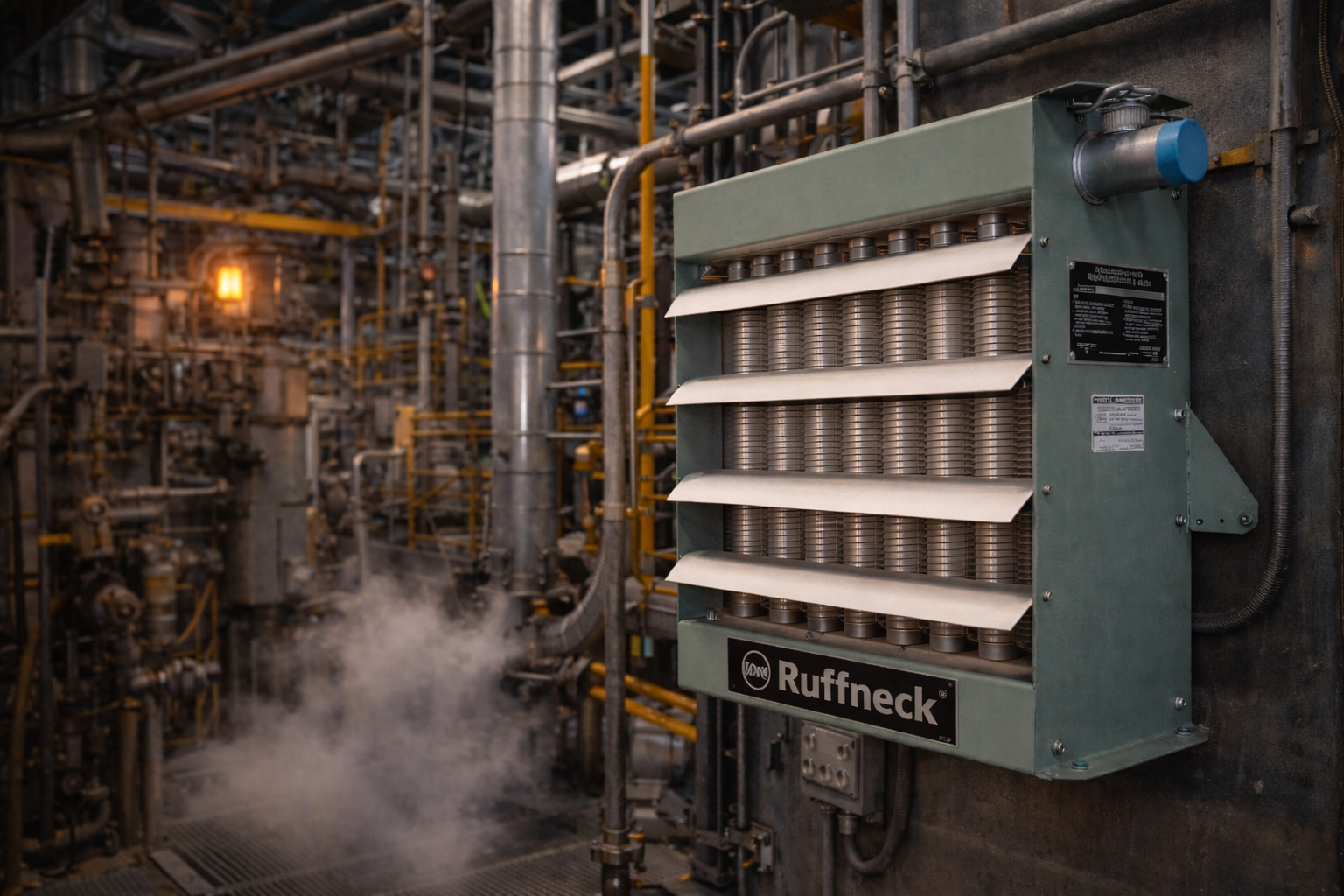
In these scenarios, compact and controlled industrial heaters like Velocity offer targeted thermal management inside control panel enclosures or equipment housings. Similarly, Ruffneck unit heaters support both personnel comfort and equipment reliability across manufacturing and maintenance bays.
The key here is avoiding over- or under-engineered solutions and selecting the system best suited to the application.
SAMM Technology – Heating | Correct Application with Thermon Solutions
Thermon is a global engineering brand developing industrial electric heating solutions engineered specifically around ATEX and IP specifications.
SAMM Technology bridges these products with real-world field requirements, ensuring the right solution is deployed in the right location.
Thermon product lines—including Ruffneck, Caloritech, Norseman, Fastrax, and Velocity—deliver safe, sustainable performance when selected with a clear understanding of application scenarios, hazardous area classifications, and process requirements.
Conclusion
When selecting industrial electric heaters, ATEX and IP ratings are not minor technical details; they are core criteria for process safety and operational continuity. Misinterpreting these requirements can turn even the most powerful or premium product into a costly mistake.
The right approach is to clarify where, under what conditions, and for what purpose the heater will operate before focusing on capacity. Only then can industrial heating systems remain safe, efficient, and reliable over the long term.