


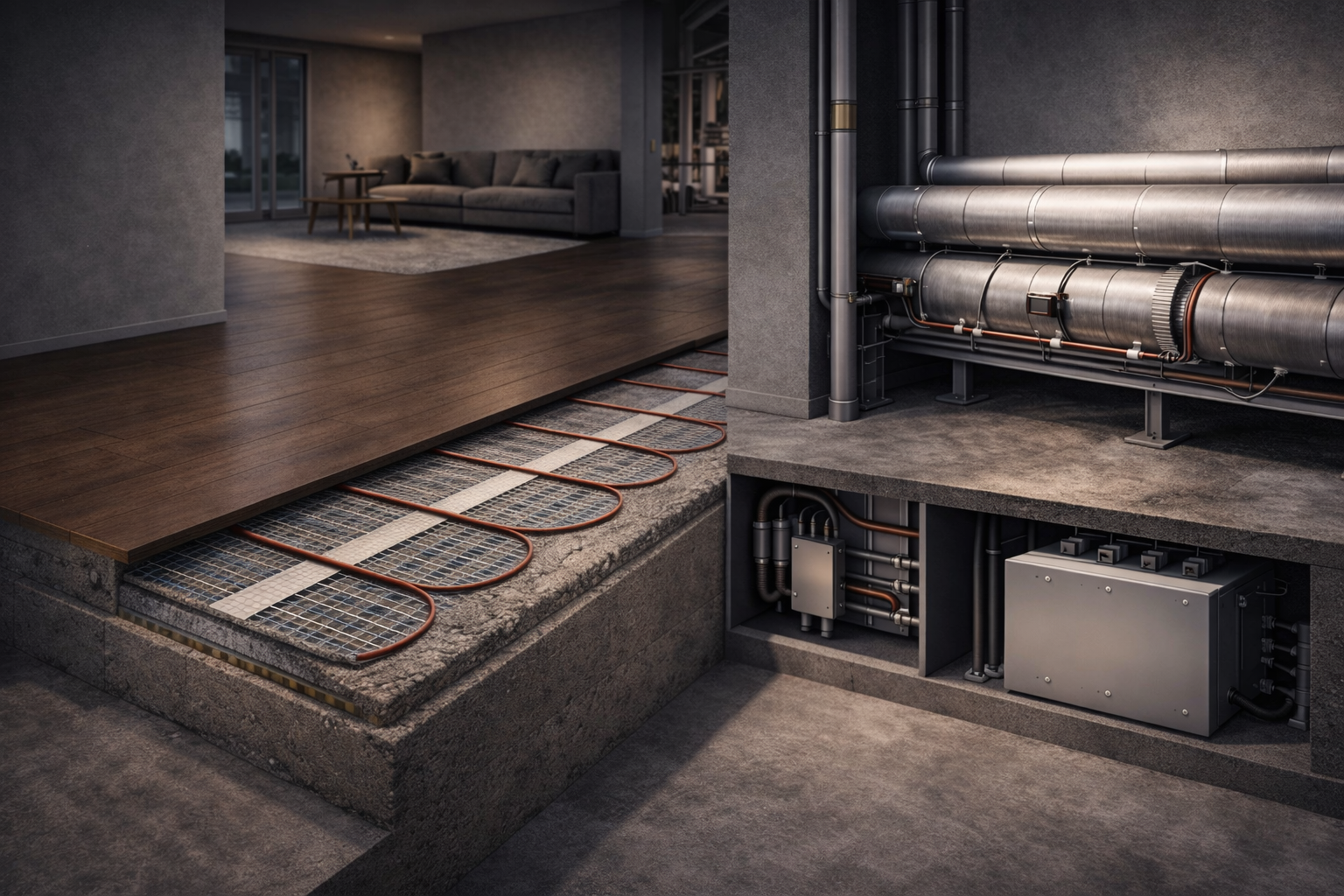
Heating systems is a broad term for technical solutions used to control temperature and ensure operational continuity across a wide range of applications—from residential buildings to industrial facilities, infrastructure projects, and specialized process environments. Modern heating systems are engineered not merely to warm space, but to fulfill critical engineering objectives such as process safety, energy efficiency, freeze and condensation prevention, and operational continuity.
Today, heating systems are categorized based on their energy source, operating principle, and intended application. This guide provides a comprehensive overview of what heating systems are, covering core residential and industrial heating technologies alongside their respective engineering approaches.
How Are Heating Systems Categorized?
Heating systems are generally classified under five main categories:
- Electric Heating Systems
- Hydronic (Hot Water) Heating Systems
- Steam Heating Systems
- Underfloor Heating Systems
- Specialized Industrial Heating Systems (Heat Tracing, etc.)
No single system is the “best” for every application. The ideal solution depends on the nature of the heating demand, required control precision, safety mandates, maintenance conditions, and long-term operating costs.
Electric Heating Systems
Electric heating systems are widely specified in both residential and industrial applications due to their precise control capabilities, rapid response times, and modular design flexibility. Far from being limited to supplemental heating, these solutions frequently serve as the primary heat source across numerous applications.
Electric heating systems fall into two primary subcategories:
- Industrial Electric Heating Systems
- Electric Heat Tracing Systems
While distinct in function and design, these two approaches frequently play complementary roles within the same project.
Industrial Electric Heating Systems
Industrial electric heating systems are high-capacity solutions designed to directly heat ambient air, gases, liquids, or process equipment. These systems are preferred as primary heat sources, particularly in facilities where steam infrastructure is impractical or where precision temperature control is paramount.
Applications
- Manufacturing bays and process spaces
- Space heating within industrial plants
- Air and gas heating applications
- Tank, duct, and cabinet/enclosure heating
- ATEX-classified hazardous locations
Primary Types of Industrial Electric Heaters
- Industrial unit heaters and space heaters
- Duct and inline process heaters
- Circulation and flanged immersion liquid heaters
- Surface, enclosure, and panel heaters
Product families in this category—such as Ruffneck, Caloritech, Norseman, Fastrax, and Velocity—form the backbone of industrial electric heating. They are built for rugged mechanical durability, strict ATEX and IP compliance, process-driven design, and long-term operational reliability.
In addition to replacing traditional steam systems, these electric solutions frequently operate alongside steam in hybrid thermal configurations within modern facilities.
Electric Heat Tracing Systems
Electric heat tracing is a specialized branch of industrial electric heating. Rather than heating ambient spaces, its primary purpose is to maintain targeted temperatures along piping, tanks, valves, and process equipment.
Key Functions of Heat Tracing Systems
- Preventing freeze hazards
- Maintaining fluid viscosity for flow assurance
- Holding tight process temperature tolerances
- Minimizing system thermal losses
Heat tracing is typically applied directly onto:
- Pipelines
- Storage tanks and vessels
- Pumps, valves, and instrumentation equipment
and serves a crucial complementary role to broader industrial electric heating setups.
Hydronic (Hot Water) Heating Systems
Hydronic heating systems are time-tested solutions widely used in residential and commercial buildings. Heat is transferred to spaces via radiators, convectors, or fan-coil units.
General Characteristics
- Consistent, stable heat distribution
- Available in centralized boiler or decentralized configurations
- Moderate initial capital expenditure
While well-suited for homes, offices, and commercial facilities, hydronic systems can face limitations in large, high-bay industrial spaces or in processes requiring rapid thermal response times.
Steam Heating Systems
Engineered for high-temperature applications demanding rapid, high-capacity heat transfer, steam heating systems remain a fixture across many heavy industrial plants.
Core Characteristics
- Operates via centralized boiler units
- Delivers high thermal energy carrying capacity
- Effective for high-volume space and process heating
Steam delivers reliable performance for manufacturing processes. In modern plants, steam systems are often paired with electric heating solutions to enhance temperature control precision.
Underfloor Heating Systems
Underfloor heating systems are specified where occupant comfort is paramount. By radiating heat upward from the floor surface, they deliver balanced temperature profiles throughout a space.
Key Advantages
- Operates at lower fluid or surface temperatures
- Uniform heat distribution without cold spots
- Concealed design that preserves interior architectural aesthetics
These systems are primarily installed in residential, office, and hospitality developments, with limited application in heavy industrial processes.
Modern Thermal Engineering: A Holistic System Approach
Today, specifying a heating system extends far beyond basic thermal output. It encompasses:
- Overall energy efficiency
- Carbon footprint reduction
- Automation and remote monitoring capabilities
- Process safety and operational continuity
This holistic approach favors providers capable of delivering both industrial and commercial/residential solutions. SAMM Technology brings these capabilities together, offering end-to-end solutions across diverse applications by combining Thermon industrial electric heating and heat tracing systems with ELEKTRA electric floor and surface heating technologies.
Key Factors to Consider When Selecting a Heating System
- Application environment (residential, industrial, or infrastructure)
- Nature of the heat demand (ambient space, process fluid, or equipment)
- Energy source availability and lifecycle operating costs
- Control precision and automation requirements
- Hazardous area safety ratings and maintenance demands
Choosing the right heating system impacts more than immediate comfort—it dictates long-term operational efficiency, safety, and reliability.
Conclusion
There is no single, one-size-fits-all answer to “what is a heating system?”
In industrial environments, electric heating encompasses far more than heat tracing alone, just as steam cannot fulfill every thermal requirement on its own.
The modern engineering approach is straightforward:
Deploy primary, supplemental, and protective heating systems in the exact locations where their unique strengths are best utilized.